

Climate resilience, or more precisely thermal resilience, of production infrastructures is a key aspect that companies are required to manage in today’s context.
Today, climate change exposes buildings and production sites to extreme conditions.
The industrial building represents a strategic asset for companies because the efficiency with which it is able to produce is directly related not only to overall profitability but also to worker safety and environmental sustainability, whose impact is reflected across the entire corporate image.
In the past, thermal comfort and energy savings were not considered during the design phase of this type of building.
Most industrial buildings were constructed in that period and represent a building stock that today requires innovative interventions to limit environmental impact, reduce consumption, maintain a healthy working environment and avoid affecting productivity.
The concept of climate resilience in the industrial and production context should not be reduced solely to the ability to withstand extreme weather events or increasingly frequent heatwaves, but should instead be understood as the ability of a building to safeguard operational continuity and sustainability under thermal stress.
Passive solutions represent an effective approach to achieving eco-sustainable objectives while ensuring production continuity despite worsening climate conditions.
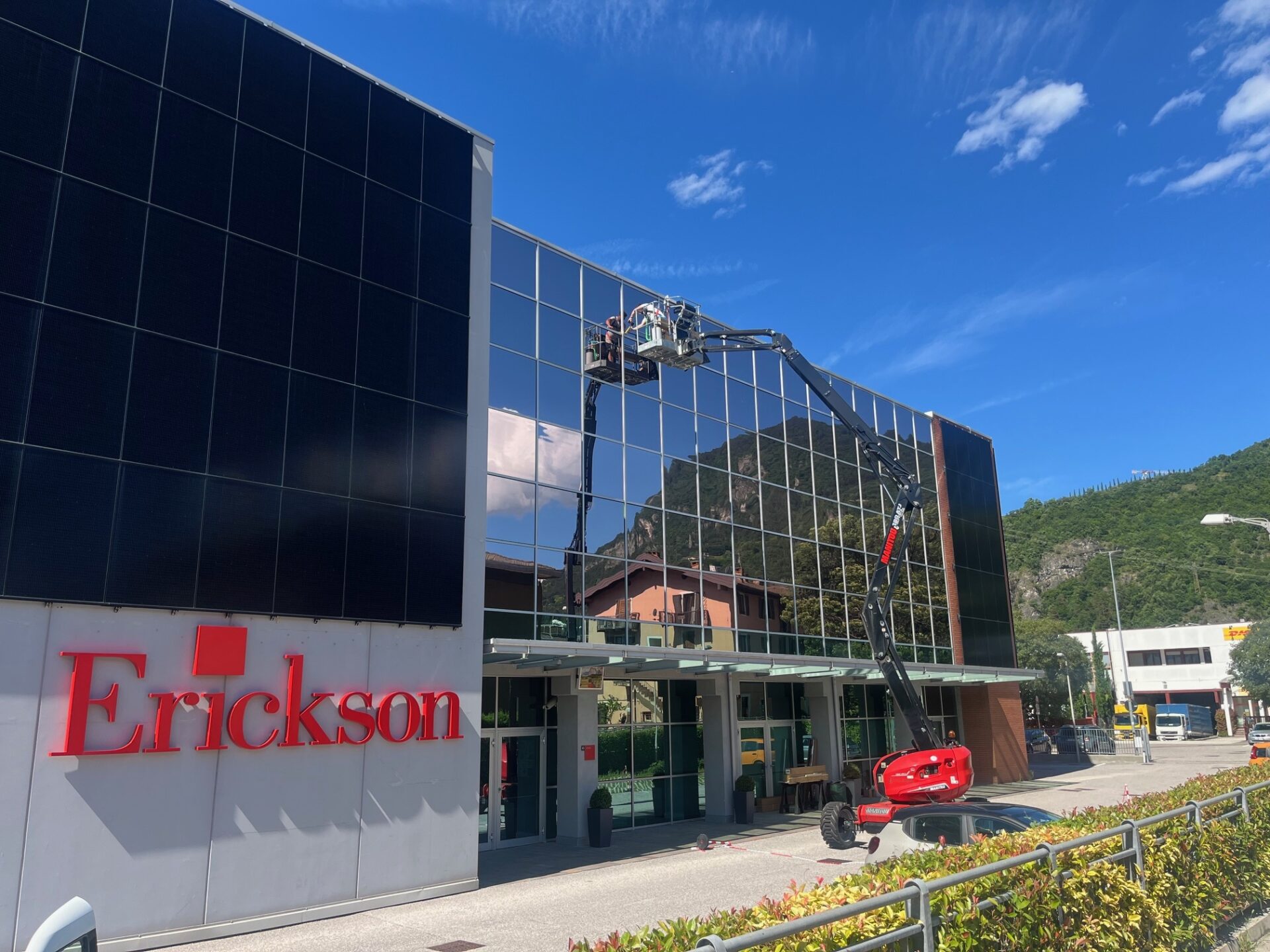
Table of contents
The impact of extremely high temperatures on the production system
A necessary clarification concerns the perception of climate change: it is not only an environmental urgency but rather a real economic risk factor capable of affecting company profitability.
Heatwaves represent a real vulnerability for businesses.
On multiple levels, extremely high temperatures prove to be burdensome for production systems: if not properly managed, they lead to increased energy and operational costs, reduced workforce efficiency and a growing incidence of technological failures.
The most prepared companies clearly demonstrate the ability to manage thermal stress both operationally and economically: this organisation is what makes them resilient and therefore capable of adapting to climate shocks without suffering their consequences.
From this perspective, it is clear that economic resilience is built upon infrastructural resilience: an industrial building where passive cooling strategies have been adopted improves the energy profile of the building while preserving its intrinsic value.
Compliance with ESG criteria is also a strong signal for stakeholders and contributes to improving market positioning.
Indoor microclimate, worker well-being and productivity
Employee safety and performance are directly linked to the thermal well-being of working environments.
When the microclimate is healthy, the benefits do not only concern the well-being and balance of people working in these environments but also their ability to reduce human error, accidents and increase productivity.
Thermal stress limits cognitive abilities and increases reaction times: these are two factors that significantly compromise workplace safety.
Several studies have also documented a decline in productivity as temperatures rise in operational contexts where intense physical effort is required.
When imagining these scenarios within production lines, it becomes easier to understand the damage to the company when work takes place in a thermally unstable environment where very high temperatures are reached.
Risks to people, increased mistakes and errors and, more generally, a decline due to internal climate conditions immediately translate into slower production or, in the worst cases, plant shutdown.
Employer obligations and risk assessment
With regard to the regulatory framework, there are various provisions designed to protect workers that require employers to assess risks related to the indoor microclimate and implement appropriate preventive measures.
From this perspective, it is important to highlight that maintaining a healthy working environment, in addition to complying with legal requirements, allows companies to transform regulatory compliance into a strategic lever.
By adopting measures aimed at improving the thermal well-being of workers, it is possible to increase machinery performance and efficiency while also achieving sustainability goals.
This objective can be achieved by acting on the building envelope of industrial and commercial facilities through energy efficiency and low-impact cooling solutions, which have the additional advantage of not requiring plant shutdown during installation.
Not only temperature: also visual safety and comfort
In assessing the indoor microclimate of a working environment, air temperature is not the only factor that must be considered.
Through transparent glazed surfaces, solar radiation also enters, producing glare on monitors and screens that can compromise work quality.
The application of passive solutions such as solar control films on transparent surfaces creates an optical filter that, while maintaining the transmission of natural light and its associated benefits, eliminates glare.
Technology vulnerabilities: risks for machinery and IoT
In addition to the necessary protection of people, better management of the microclimate of working environments also represents an important factor for machinery and technologies.
For elements sensitive to temperature variations, creating a stable thermal environment helps maintain proper functioning.
In the case of excessive overheating, however, wear of electronic and mechanical components accelerates and the risk of technical failures increases.
This concerns not only IoT sensors, increasingly widespread thanks to technological evolution in the production sector, but also network equipment and data processing servers.
Within industrial buildings without passive solutions, machine cooling systems are subjected to continuous strain, requiring significant energy consumption.
The challenge successfully addressed by passive solutions results in an environment where the useful life of systems, machinery and devices is extended, protecting operational continuity.
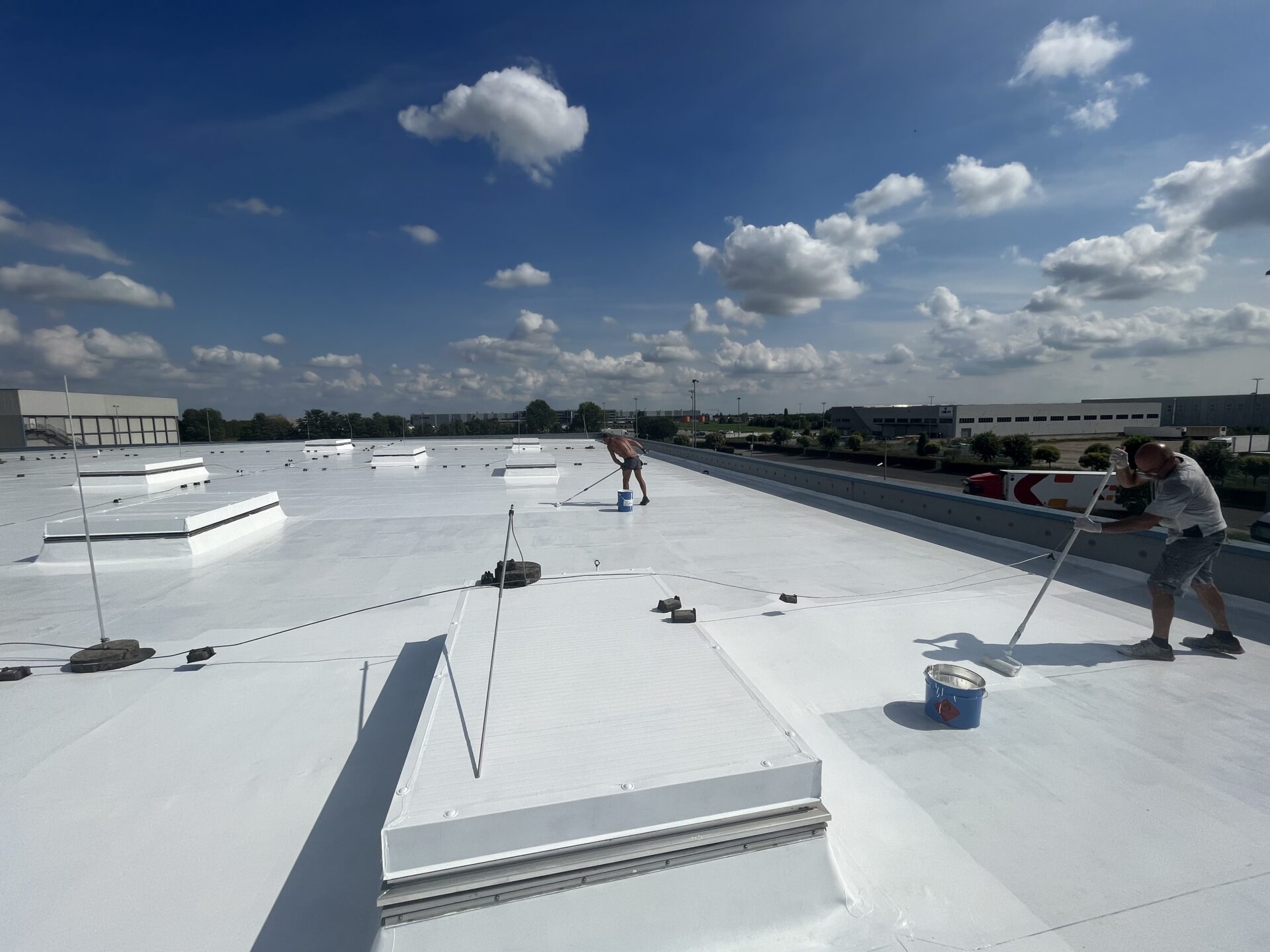
For roof coverings, the adoption of measures such as reflective coatings also represents an element to limit the structural degradation of bituminous membranes caused by high temperatures.
Similarly, liquid coatings for skylights reduce the greenhouse effect, improve indoor climate conditions, protect them from hail and regenerate their surface.
Serisolar is the partner that offers complete and guaranteed solutions
The energy upgrading of industrial and commercial buildings is the challenge that Serisolar has chosen to face together with companies.
Through consultancy that analyses the specific situation of each building, structure and production site, our approach makes it possible to identify the most suitable passive solution to achieve concrete and measurable climate resilience objectives in compliance with sustainability and regulations.
Our work is the result of technical experience gained in the sector, which has allowed us to develop strong expertise in evaluating the products we offer.
Furthermore, Serisolar interventions benefit from installation carried out by qualified personnel capable of precise, timely and reliable work.
To transform industrial buildings into powerful resources that enhance thermal resilience and ensure profitability, worker safety and environmental sustainability, contact us.