
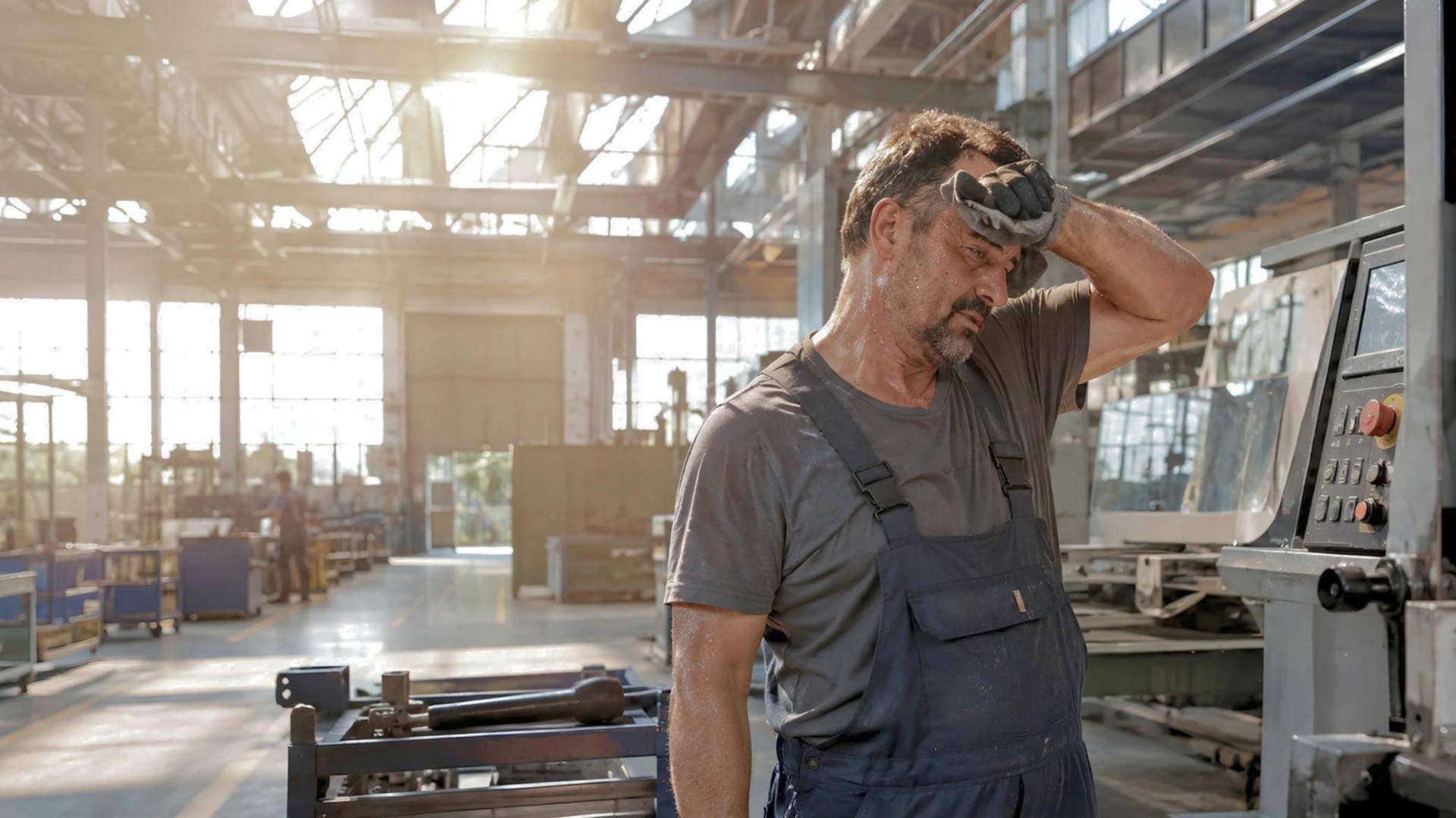
Rising temperatures during the summer and the months immediately before and after it are difficult to ignore. According to measurements by the CNR Institute of Bioeconomy, part of Italy’s largest public scientific research organisation, the summer of 2026 was the hottest since 1950, overtaking the previous record set in 2024, with the average temperature in August one degree higher.
For businesses and companies, however, these extreme temperatures, although increasingly frequent, continue to be considered primarily in terms of the energy costs associated with cooling systems. This type of analysis is certainly necessary, but it does not provide the complete picture.
The cost of rising temperatures, and therefore of managing the indoor microclimate in a production, commercial, or other workplace environment, also includes hidden costs. Slowdowns, reduced concentration, and errors by employees, as well as process anomalies, stress on machinery, and deterioration of materials, are among the effects associated with high temperatures.
Although difficult to quantify, these different factors contribute to determining the actual cost of overheating in indoor working environments. In this article, we examine how to address the issue in order to reduce the impact of these costs on a company’s financial performance.
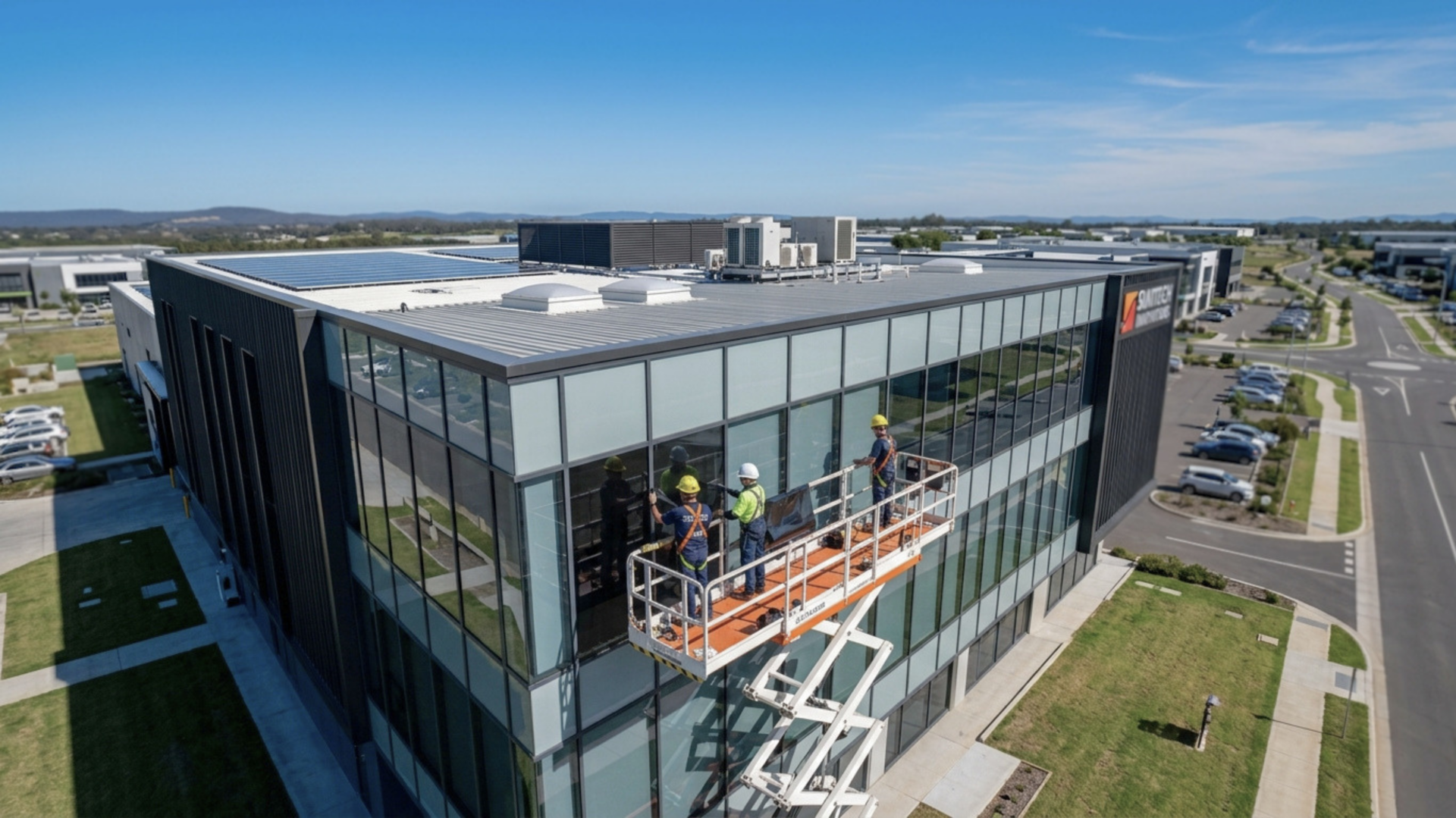
Table of contents
Visible and hidden costs: energy for cooling and what the bill does not show
The energy required for cooling, namely the energy consumed by active systems and equipment, is undoubtedly the most obvious cost to consider. Solar radiation striking metal roofs or bituminous membranes, as well as glazing and skylights, affects the building envelope, which absorbs the radiation and transfers it indoors in the form of heat.
Added to this is the thermal load generated by activities inside the building. Machinery and production lines, motors, compressors, as well as servers, lighting, and other equipment add thermal energy to the heat entering from outside.
Under these conditions, cooling systems must counteract both the heat generated inside the building and the heat coming from outside.
The company therefore purchases and consumes energy to reduce heat that it has only partially generated itself – the internal heat – while also dealing with the heat absorbed from solar radiation.
The factors mentioned above must also be taken into account and can be divided into four components:
- people’s ability to work, which decreases as the temperature of their working environment rises;
- errors and instability in processes;
- partial deterioration or complete damage to materials, products, or packaging;
- machinery failures requiring extraordinary and emergency maintenance.
Together with the actual cost of operating cooling systems, all these factors provide a broader picture of the impact of the greenhouse effect on a business: a widespread loss that can progressively reduce the organisation’s overall efficiency.
The impact on people, processes, and quality of work
Temperature is not the only indicator of whether an environment is suitable for carrying out work. Humidity, ventilation, and radiant heat are also part of the microclimate, while perceived temperature also varies according to the activity being performed.
The combination of these environmental parameters therefore determines whether a workplace is safe for people before considering whether it is comfortable.
Evidence collected by the WHO and various European and national occupational safety organisations clearly shows a correlation between productivity and temperature: as temperature rises, productivity decreases.
The loss of efficiency is a physiological response because the body uses energy for thermoregulation. As a result, both working pace and concentration decrease, even when performing routine tasks.
Quality of work and quality of results
A production process can generate losses when it becomes less stable or more prone to errors. Under these conditions, the greenhouse effect can increase indoor temperatures, leading to more manual errors by employees while also causing overheating that can result in anomalies and malfunctions in machinery.
It is therefore clear that the quality of work, referring not only to people’s work but also to the performance of equipment, is affected by changes in the microclimate and can result in non-conformities along the production chain.
An increase in waste also results in additional waste-management costs, while compromised final product quality can cause reputational damage with far greater economic and brand-related consequences.
Damage to sensitive materials, products, and packaging
In addition to people and equipment, materials are also affected by an unstable microclimate. The list of materials requiring precise storage conditions is extensive and is certainly not limited to the food and beverage or chemical and pharmaceutical industries.
Electronic components, polymers, paints, and adhesives, as well as paper and textiles, can undergo alterations, experience a reduction in product lifespan, or compromise subsequent processing if they are not stored under suitable conditions.
Heat can be one part of the problem, as ultraviolet radiation entering through glazing or skylights also contributes to the deterioration of materials, goods, and exposed surfaces.
The overall lack of uniform conditions can have the greatest impact: warmer areas of a warehouse, or sections close to the roof, skylights, or glazed façades, are exposed to a greater risk of damage and deterioration.
The performance of machinery and equipment under controlled conditions
Any type of motor, machine, compressor, or device must dissipate the heat it produces during operation. When operating in environments where the temperature is already high, this can become more difficult and lead to different consequences.
Immediate failure is one of these and perhaps the most serious, as it instantly brings a production line to a halt and requires the entire process to be reviewed. Reduced performance, intermittent anomalies, or the activation of protection systems are problems that may precede a failure but can still have a negative impact on production continuity.
These events create a bottleneck because even a short interruption can affect subsequent stages and may also cause upstream processes to stop.
The benefits of passive solutions
Passive solutions are defined as such because they operate without requiring energy. Once installed, they work by limiting the amount of radiation absorbed by the building envelope and consequently transferred indoors.
Among the passive solutions for the thermal retrofit of a building, solar control films are designed for transparent surfaces, while heat-reflective coatings are intended for roofs.
The appropriate measure for improving indoor temperature management must therefore be selected according to the building’s configuration and following a technical assessment of its exposure and structure.
Simple but effective measures, not basic solutions
Low-impact strategies should not be confused with basic solutions. High-end products in the field of solar control films and heat-reflective coatings are technologically advanced solutions designed to achieve a specific result.
This approach requires equally careful design and planning. Unlike invasive work, however, it does not affect the building structure and, once the most suitable solution has been identified, requires extremely short installation times.
Choosing passive solutions therefore means opting for an alternative that not only requires no energy consumption to operate but also supports existing cooling systems while simultaneously meeting the sustainability requirements expected of organisations today.
Serisolar supports businesses with sustainable solutions that protect operating margins
A low-impact measure delivers immediate results in controlling temperatures and improving the indoor microclimate, while adding further factors to the calculation of return on investment.
Savings in energy consumption are combined with savings from avoided failures and extraordinary maintenance, recovered productive hours, and an increase in the overall lifespan of materials and equipment.
Moreover, a fast, technical, and professional installation is significantly more convenient than construction work that, even for a short period, still requires business operations to be stopped.
Serisolar supports companies in achieving concrete objectives that meet sustainability requirements while significantly reducing energy consumption and costs.
Our work is to design tailored solutions based on the results of a rigorous technical assessment that evaluates each building according to its specific characteristics and requirements.
Your company is unlike any other. Choose an energy retrofit strategy that takes its specific characteristics into account.
Contact us to speak with a consultant and arrange a free site survey.