

National and European regulations require companies to reduce greenhouse gas emissions. The real challenge for businesses, however, is reconciling this environmental imperative with economic stability while safeguarding operational continuity.
The day-to-day management of thermal loads within production facilities, industrial warehouses and commercial buildings is a variable that affects more than costs. Energy efficiency is no longer simply an expense to optimise and reduce; it has become a decisive factor in market positioning because of its connection with ESG criteria and the protection of company assets.
An energy audit or energy assessment provides the strategic starting point for organising an energy-efficiency improvement pathway. However, the analytical report must become a guide that is translated into operational decisions: too often, high-value energy-retrofit opportunities are lost in favour of interventions such as photovoltaic systems or the renewal of HVAC systems, overlooking the potential offered by the building envelope.
Let us look in detail at how to make the best use of the information on a building’s current condition in order to implement a high-value energy retrofit.
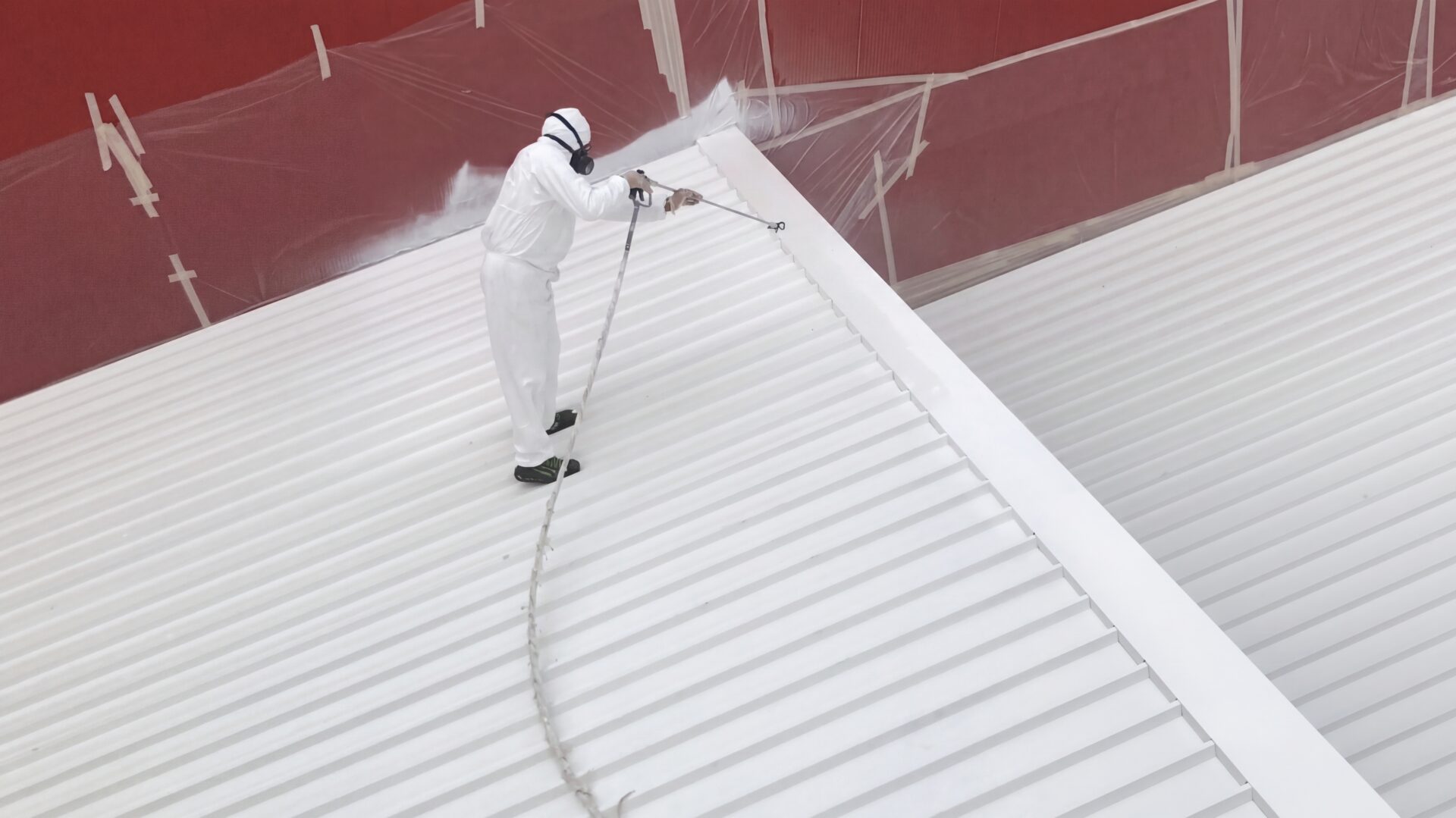
Table of contents
The importance of the energy audit for operational decisions
With a snapshot of a building’s thermal and electrical energy flows, namely an energy audit, you obtain the data needed to identify waste and critical issues, as well as define possible improvement scenarios.
In industrial and commercial real estate, properties commonly feature large surface areas and substantial volumes. It is precisely in these settings that the information obtained through the energy assessment clearly highlights a systemic discrepancy between purchased energy and indoor thermal comfort.
At this point, the data supplied by the audit can become a useful tool for making informed and effective operational decisions.
Installing new systems: a response that does not always convince
However, installing new systems to manage indoor climate and temperature, or upgrading the systems already in use, remains the most common response from companies.
For energy supply, common practice often involves installing photovoltaic systems, while cooling units are replaced with new high energy-efficiency HVAC systems.
Renewables and, among them, electricity self-generation through photovoltaic systems are undoubtedly a significant step towards the ecological transition. However, the methodological mistake is to consider them the only viable route to energy savings.
Likewise, a latest-generation air-conditioning system can reduce consumption compared with an older, less efficient system. Yet if it is installed in a building with structural shortcomings in insulation, thermal protection or exposure to uncontrolled solar radiation, it will still have to operate under thermal overload conditions.
The paradox of thermal sizing for summer peaks
That is precisely the scenario in which a system is sized for peak power based on the most extreme thermal conditions. This happens because no intervention has been carried out on the passive performance of the building, namely interventions that reduce thermal load effectively and sustainably.
When such solutions are not considered, the company faces a higher purchase cost for systems that will subsequently operate with an inefficient consumption profile and will probably fail to meet the stated performance targets.
Assessing structural interventions for an energy retrofit: costs, risks and analysis of invasive alternatives
When the need to intervene on the building envelope becomes clear, there are several solutions for reducing thermal transmittance and solar-radiation penetration.
Here too, replacing windows and doors, roof coverings or adding external insulation layers proves particularly costly in both logistical and economic terms.
The direct and indirect economic impact of production downtime
The limitation of structural interventions such as those mentioned lies not only in costs, but in their impact on operational continuity. Production downtime, even when planned, alters normal workflows and has financial implications at several levels.
Viewed in these terms, the economic cost of a downtime period may be far greater than the monetary value of the building retrofit intervention, making it twice as difficult to amortise over time.
End of life of materials and construction waste: the cost of disposal
Another issue, both environmental and managerial, is the disposal of construction waste produced after interventions on building structures. Dismantling and removing roofing membranes, windows and doors, and obsolete panels generates tonnes of special waste that requires strict traceability from the site where it is produced to the destination facility where it is delivered.
The generation of construction waste overall also worsens environmental impact indicators, while requiring specific management costs and protocols.
For these reasons too, invasive structural interventions are particularly burdensome from the perspectives of cost and sustainability.
Passive solutions: quick interventions that are often overlooked
When an energy retrofit involves the installation of passive solutions, it demonstrates that energy-audit data has been taken into account and that the goal is to maximise thermal efficiency without jeopardising operational continuity.
Unlike an active system, a passive solution does not consume electricity. Instead, it works by modifying the physical properties of the building envelope, including reflection, absorption and emissivity, thus limiting thermal load at its source.
After passing through a transparent surface or being absorbed by a dark opaque surface, solar radiation is transformed into short-wavelength heat that becomes trapped inside a building, causing summer overheating.
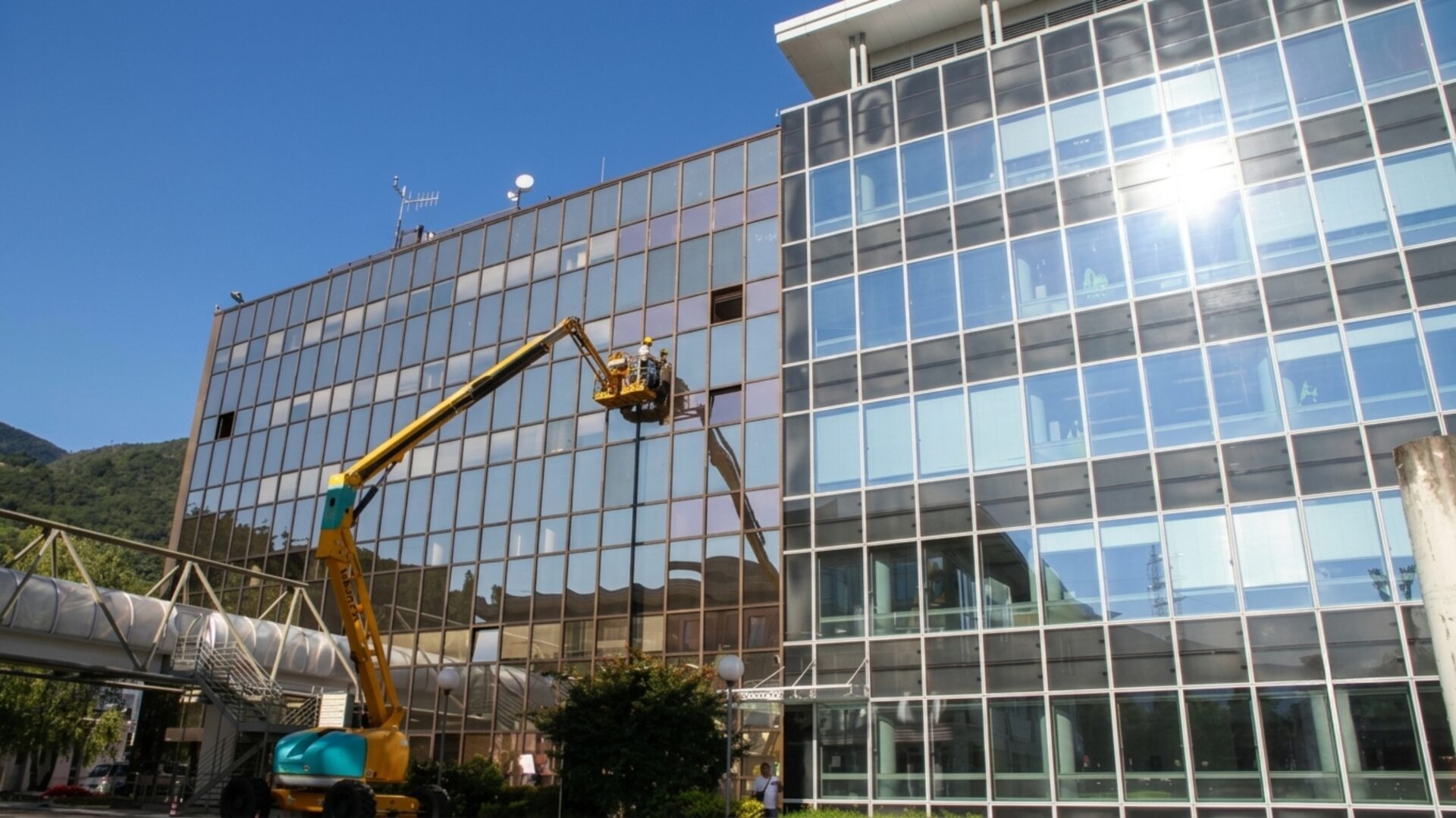
Modern passive technologies applied to transparent and glazed surfaces include solar-control films, while thermal-reflective coatings are ideal for roofs and skylights. Both are high-performance solutions that reject overall solar energy, thereby reducing thermal load.
Serisolar’s solutions for companies choosing a sustainable, high-value energy retrofit
Serisolar supports companies in achieving a sustainable energy retrofit, starting from the data gathered through the energy audit. The value of our technical consultancy lies in identifying the highest-performing solutions for each industrial and commercial building, reducing or completely eliminating the need for complex structural interventions.
The benefits of solar-control films and thermal-reflective coatings are inherent in passive solutions that, in addition to not increasing energy consumption, protect operational continuity because they are easy and very quick to install compared with the time required for structural interventions.
These modern solutions are technologically reliable and provide a practical response to issues caused by rising temperatures during warmer months. In addition, the solar-control films and thermal-reflective coatings we offer are certified and guaranteed by their manufacturers, alongside Serisolar’s guarantee for the installation work.
Contact us to discover how your headquarters, production site or commercial space can be transformed and help you reach tangible climate-resilience goals.